October 10, 2026


Most portfolio bios get written in a hurry, at the end of a long afternoon, by someone who would rather be doing the actual work. That's why so many of them sound the same: a job title, a stack of adjectives, and a sentence about being passionate. Yours doesn't need to be a masterpiece. It needs to sound like a person — ideally you — in eighty words or so.
Two things go wrong. The first is abstraction. Lines like "a creative professional with a passion for storytelling" are true of thousands of people, which means they tell a reader nothing about you. The second is the CV reflex: duty language, third person, phrases borrowed from job adverts.
Third person is the usual culprit. "Ravi is a designer who works with…" makes you sound like a company rather than a person. There's a place for it in a formal speaker bio, but on your own portfolio it adds a layer of distance you don't need. Write in first person unless the site genuinely represents a studio.
And if you're tempted to describe your ambitions rather than your work, resist it. "Aspiring" isn't a selling point. What you've already made is.
Before you draft a single sentence, answer four questions on a scrap of paper:
Those answers give you nouns, verbs and specifics — the raw material a bio is made from. Specificity is what makes a claim believable. "I build booking systems for small hotels" beats "I create digital solutions" because a reader can picture it, and because it quietly tells them whether they're in your audience at all.
Try one rule while drafting: no adjective without an example. If you say you're thorough, mention the checklist you keep. If you say you're collaborative, name the people you work with.
Tone isn't a personality you have to invent; it's a set of settings you can adjust on purpose. Think of three dials: formal to conversational, warm to blunt, plain to technical. Here's the same fact at three settings.
Formal: "I provide editorial support to independent publishers."
Middle: "I edit books for independent publishers, mostly non-fiction and memoir."
Warm: "I edit non-fiction and memoir for independent publishers, and I'm happiest with a manuscript that needs structural work before the line editing."
The middle version is a good default for most portfolios. Plain vocabulary, a contraction or two where they feel natural, and one detail that could only have come from you.
If your humour is dry in real life, don't write jokes. Readers can feel the strain. Match the way you'd speak to a new client in the first five minutes: friendly, clear, not performing.
Whether you have forty words or two hundred, the order stays roughly the same:
Rough lengths: 40–60 words for a footer or contact page, 80–120 for an about page, up to 200 if you're also explaining how you work. Keep that first sentence short enough to read in one breath.
Illustrator. Before: "A passionate and versatile illustrator with a keen eye for detail and a love of storytelling." After: "I draw animals for children's books, mostly bears. Recent work includes a picture book about a very slow tortoise and a poster series for a wildlife charity."
Notice how much narrower the second one is. Narrow reads as confident. You can widen it later; nobody has ever complained that a bio was too specific about what someone does.
Developer. Before: "Results-driven software engineer with experience across the full stack, seeking opportunities to leverage skills." After: "I build and maintain web applications for small teams, usually in Rails and Postgres. I like projects where the code has to be boring and reliable: payments, bookings, admin tools nobody notices."
Photographer. Before: "Capturing moments and turning them into memories." After: "I photograph weddings in and around Bristol in a documentary style. I stay out of the way, and I don't do posed group shots for longer than ten minutes."
That last line sets an expectation and shows a preference. Both are more useful to a reader than another adjective.
Then read it once more, this time imagining you're a stranger who has thirty seconds and three other tabs open.
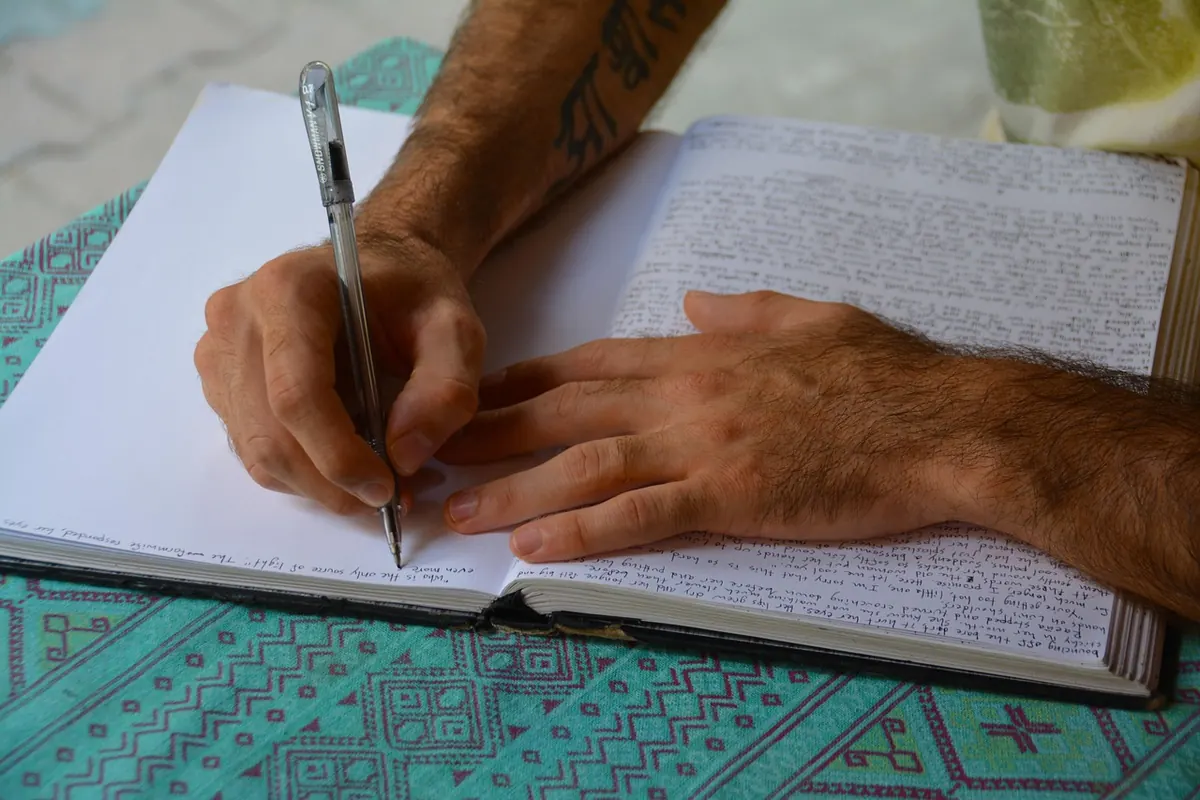
Draft the messy version in a notes app, somewhere with no formatting to fiddle with. Say it out loud. Cut it by a third. Put the short version at the top of your portfolio and the longer one on your about page.
Then, when your work shifts — a new specialism, a move, a project you'd rather not be remembered for — spend five minutes updating it. A stale bio is far more common than a badly written one, and it's the quicker problem to fix. Start with the four questions. You'll have something honest by the end of the afternoon.
Photo: terimakasih0 / Pixabay
Curated portfolios for creative professionals.
Copyright © 2026 Ideal Folio. All rights reserved. Ideal Folio.