October 10, 2026


A gallery director opens your email on a Tuesday morning, with a queue of other submissions waiting behind yours. They give it about ninety seconds. In that time they need to see competent images, a sense of what you make, and a reason to keep reading. None of that is mysterious, and almost all of it sits within your control.
What follows is the checklist experienced artists run through before they press send, covering the ten things galleries genuinely look for, roughly in the order they notice them.
Photography is where most portfolios lose their audience before the work gets a fair hearing. A painting shot under a yellow kitchen bulb, or a sculpture photographed against a cluttered floor, suggests the artist hasn't thought about how the work will be seen. Fair or not, that judgement lands in seconds.
Shoot in even, diffuse daylight — an overcast day near a north-facing window is close to ideal. Keep the camera parallel to the canvas, rest it on something steady, and compare the photograph with the actual piece on screen before you go any further. Colour drift is the complaint galleries raise most often, and it's the easiest fault to fix by checking the two side by side.
Your whole selection should look as though it was photographed in one sitting: the same neutral background, the same colour temperature, the same crop logic. If a few older pieces can't be reshot to match, ask yourself honestly whether they belong in this submission at all. For three-dimensional work, include one clean full view plus two or three details showing surface, edge and construction.
Keep files sensible. A long edge of around 1500–2000 pixels is plenty for screen review, and a handful of megabytes is far easier to handle than a folder of 40MB files. If the gallery specifies something, send exactly that.
A gallery is choosing a show, not hosting a retrospective. Two or three clear threads read far stronger than twenty unconnected pieces, even when every single one is good. Look for what genuinely links the work: a recurring material, a subject you keep returning to, a scale you favour, a process you've spent years refining.
If you make large abstract canvases and small figurative drawings, pick the direction you want to be known for and lead with it. The rest isn't wasted; it's for a second conversation, a studio visit, or a different gallery with a different programme. Editing is the real work here. Most portfolios improve by removing a third of the images.
Two paragraphs, roughly 150–250 words, in the first person. Say what you make, what it's made from, how it's made, and what you're trying to resolve. Concrete nouns beat abstract ones every time. "I mix ash into the gesso so the surface stays chalky and refuses the light" tells a gallery more than a paragraph about liminal space.
If a sentence could describe three hundred other artists' work, cut it.
Read the statement aloud. If you stumble, rewrite it. Hand it to someone who isn't an artist and ask what they think you make. Then add one sentence aimed directly at that gallery — a show of theirs you saw, an artist on their roster whose work sits near yours. That single line shows you did the homework most people skip.
Most recent first, with years, venue names and cities. Be clear about whether each show was solo, group, juried or self-organised. Galleries notice the difference and respect it, and inflating a self-organised show into something grander is the kind of detail that gets remembered. Add residencies, awards, commissions, public collections and relevant publications. Leave out the rest.
A short, accurate list reads better than a long, thin one. If your exhibition history is still growing, lead with the strength of the work and let education, prizes or commercial commissions carry the professional side. One thoughtful commission for a public building can say more than six group shows in borrowed rooms.
Each image needs a caption: title, year, materials, dimensions, and whether it's framed. Give artwork dimensions first, then framed size if it differs. Prints and photographs need edition information — how many, whether the edition is sold out, and what the buyer receives.
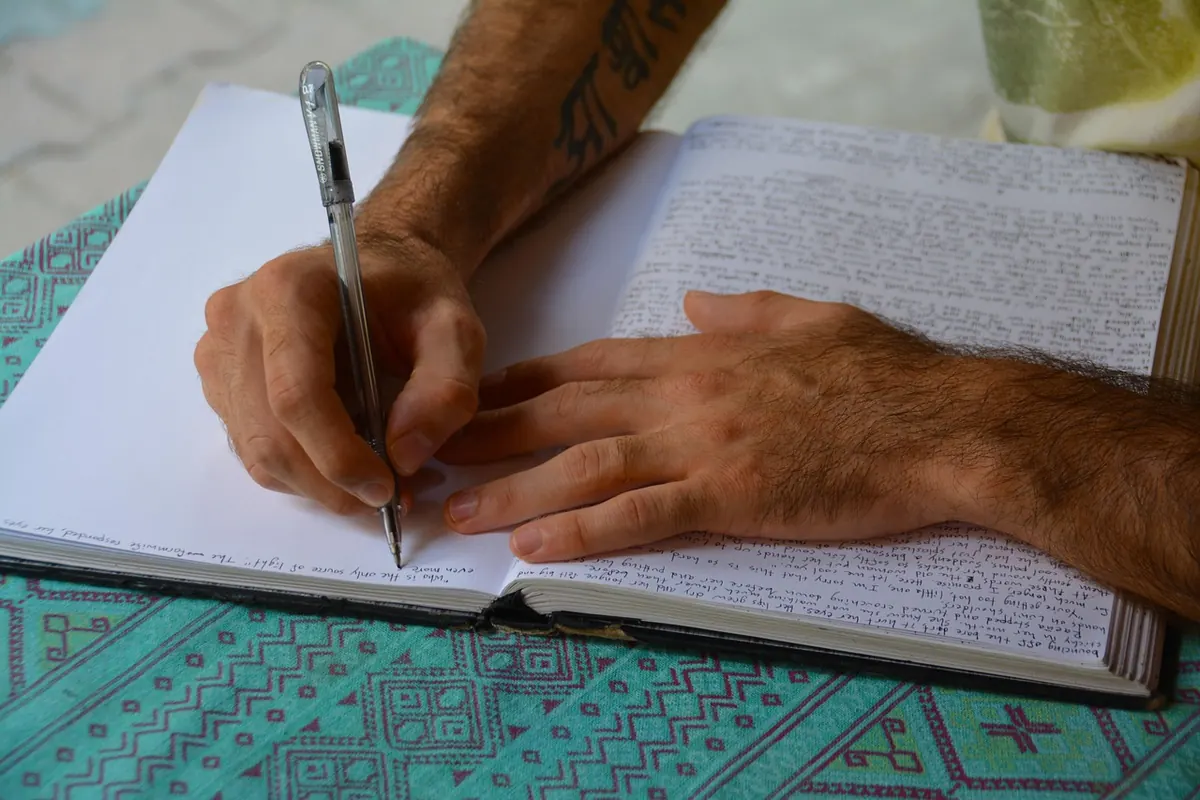
Photo: cottonbro studio / Pexels
Curated portfolios for creative professionals.
Copyright © 2026 Ideal Folio. All rights reserved. Ideal Folio.